

Two planets turn retrograde within three weeks of each other this autumn. Venus stations retrograde on October 3, 2026 and Mercury follows on October 24, 2026, and they turn direct again within a day of each other on November 13 and 14. This guide lists every retrograde for 2026 and 2027 with the exact date, the sign and the degree, so you can plan around them or simply know what you are looking at.
Retrograde Dates at a Glance
- Mercury retrograde, next: October 24 to November 13, 2026, in Scorpio.
- Venus retrograde: October 3 to November 14, 2026, from Scorpio back into Libra.
- Jupiter retrograde: December 13, 2026 to April 13, 2027, in Leo.
- Mars retrograde: January 10 to April 1, 2027, from Virgo back into Leo.
- Saturn: turns direct December 10, 2026, then retrograde again August 9 to December 24, 2027, in Aries.
- Mercury in 2027: February 9 to March 3, June 10 to July 4 and October 7 to October 28.
Dates below are in UTC, so convert to your own time zone, which can move a station to the previous or next calendar day. Venus turns direct at 00:22 UTC on November 14, for instance, which is the evening of November 13 in the United States.
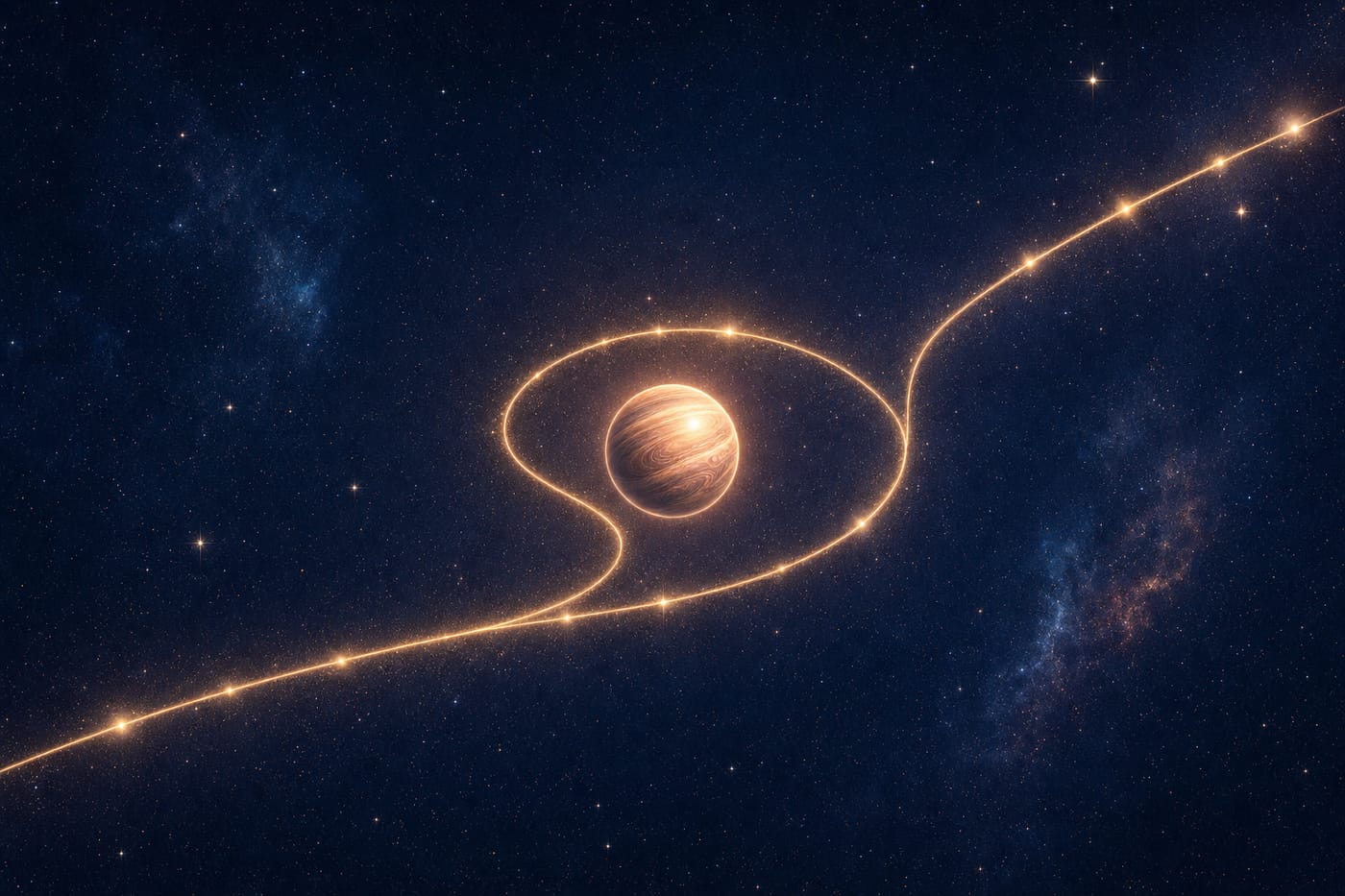 Seen from Earth, a retrograde planet slows, appears to reverse along the zodiac, then resumes its forward path.
How These Dates Were Calculated
Retrograde is not a date on a calendar but a moment when a planet's apparent motion against the zodiac reverses. We calculated each station by finding the instant when the planet's apparent ecliptic longitude, as seen from Earth, stops increasing (stations retrograde) or stops decreasing (stations direct). It is the same ephemeris that powers the Astroo live sky and your birth chart. Other sources can differ by a few hours because they round to a date or use another time zone, so check the UTC time if exactness matters to you.
Mercury Retrograde 2026 and 2027
Mercury goes retrograde about three times a year for roughly three weeks and rules communication, travel, contracts and technology in traditional astrology. In 2026 and 2027 it does so three times each. The shadow columns use the common convention: the pre-shadow starts when Mercury first reaches the degree where it will later turn direct, and the post-shadow lasts until it passes the degree where it turned retrograde.
- February 26 to March 20, 2026 in Pisces (22°34′ Pisces back to 8°29′ Pisces). Already finished.
- June 29 to July 23, 2026 in Cancer (26°15′ Cancer back to 16°19′ Cancer). Already finished.
- October 24 to November 13, 2026 in Scorpio (20°59′ back to 5°02′ Scorpio). Retrograde at 07:18 UTC on October 24, direct at 15:56 UTC on November 13. Pre-shadow begins October 4, post-shadow ends November 30.
- February 9 to March 3, 2027 from Pisces into Aquarius (5°59′ Pisces back to 20°55′ Aquarius). Pre-shadow begins January 25, post-shadow ends March 24.
- June 10 to July 4, 2027 from Cancer into Gemini (6°22′ Cancer back to 27°28′ Gemini). Pre-shadow begins May 25, post-shadow ends July 19.
- October 7 to October 28, 2027 from Scorpio into Libra (4°56′ Scorpio back to 19°19′ Libra). Pre-shadow begins September 16, post-shadow ends November 13.
The October 2026 retrograde is in Scorpio, a sign about trust, finances shared with others and what is kept private, so astrologers expect the review to land there. For a closer reading, see our guide to what Mercury means in each sign and house.
Venus Retrograde 2026
Venus is retrograde for about six weeks every nineteen months. It stations retrograde on October 3, 2026 at 8°29′ Scorpio (07:07 UTC) and turns direct on November 14, 2026 at 22°52′ Libra (00:22 UTC). Its pre-shadow began on August 31 and its post-shadow runs until December 16. Venus governs love, money and values, so this is the traditional window to revisit relationships and spending rather than commit to something new. If you want to know what it means for the sign it rules in your own chart, read about the Venus sign.
Mercury and Venus are both retrograde from October 24 to November 13, 2026. That 20-day overlap is the part of the year people call a double retrograde.
Mars Retrograde 2027
Mars is retrograde roughly every two years, for about two and a half months. The next one starts on January 10, 2027 at 10°26′ Virgo and ends on April 1, 2027 at 20°56′ Leo, so it also carries Mars from Virgo back into Leo. Mars rules drive and conflict, and astrologers treat a retrograde as a time when energy is better spent finishing or reworking than launching.
Jupiter Retrograde 2026 and 2027
Jupiter was retrograde earlier in the year, turning direct on March 11, 2026 in Cancer. It stations retrograde again on December 13, 2026 at 27°01′ Leo and turns direct on April 13, 2027 at 17°00′ Leo. Jupiter retrogrades last about four months and are traditionally read as a time to consolidate growth.
Saturn, Uranus, Neptune and Pluto
The outer planets spend roughly five months of every year retrograde, and their stations arrive at about the same time each year, drifting a few days later, so they are more of a seasonal rhythm than an event. As of early October 2026, Saturn, Uranus, Neptune and Pluto are all retrograde, and Pluto is the first to turn direct, on October 16.
- Saturn in Aries: retrograde since July 26, 2026 (14°45′), direct December 10, 2026 (7°56′), retrograde August 9, 2027 (27°53′), direct December 24, 2027 (21°01′).
- Uranus in Gemini: retrograde since September 10, 2026 (5°42′ Gemini), direct February 8, 2027 (1°41′ Gemini), retrograde September 15, 2027 (9°57′ Gemini).
- Neptune in Aries: retrograde since July 7, 2026 (4°25′), direct December 12, 2026 (1°37′), retrograde July 9, 2027 (6°40′), direct December 15, 2027 (3°51′).
- Pluto in Aquarius: retrograde since May 6, 2026 (5°31′), direct October 16, 2026 (3°04′), retrograde May 8, 2027 (7°11′), direct October 18, 2027 (4°45′).
Why Planets Appear to Move Backward
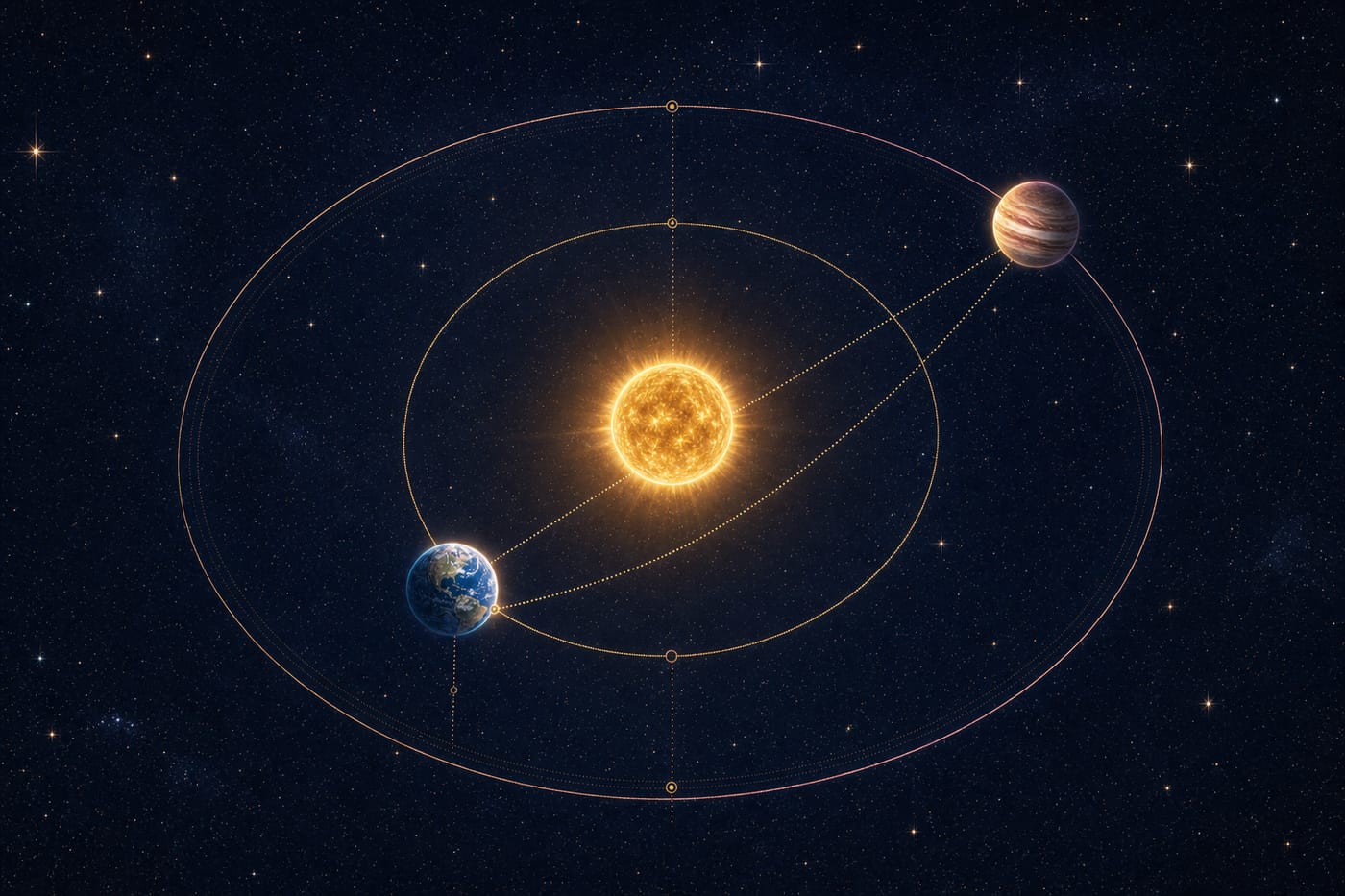 Illustration, not to scale. When Earth passes an outer planet, the planet appears to slide backward against the stars.
A planet never actually reverses. Retrograde motion is a perspective effect. When Earth overtakes a slower outer planet, such as Mars or Jupiter, on its inner track, the outer planet seems to drift backward against the background stars for a few months, the way a slower car appears to slide back as you pass it on the highway. For Mercury and Venus, which orbit inside Earth's orbit, the effect occurs when they pass between Earth and the Sun. The "stations" are the two moments when the apparent motion pauses before changing direction.
What Astrologers Read in a Retrograde
Retrogrades are real as an observation, but what they do to people's lives is a tradition, not a measured effect. Astrologers read them as periods to review, revise and reconnect rather than begin, and there is no scientific evidence that a retrograde causes electronics to fail or relationships to break. It is also a handy excuse to do things that are worth doing anyway: back up your files, read contracts twice and reconsider purchases. Treat the dates as a prompt for reflection and use your own judgement.
How strongly a retrograde is felt depends on where it falls in your chart. A retrograde crossing a house or touching a natal planet is read as more personal than one in an empty part of the chart. Use the transit chart calculator to see which of your houses and planets the retrograde planets are crossing, and the astrology calendar to follow the stations as they arrive.
See Your Current Transits
Discover what the planets are doing right now and how current cosmic movements affect your personal birth chart today.
Keep Track of the Retrogrades
For definitions of the terms used here, see the Astroo astrology dictionary, or ask the AI astrologer how a particular retrograde touches your chart.